Remodels & additions
Remodels are where the surprises live. A lot of the housing stock between Stuart and Jupiter went up between the 1950s and the 1980s, and once the drywall comes off you find out what previous owners and their brothers-in-law actually did. Ken handles the electrical side of a remodel or addition end to end — including the parts nobody quoted because nobody could see them yet.
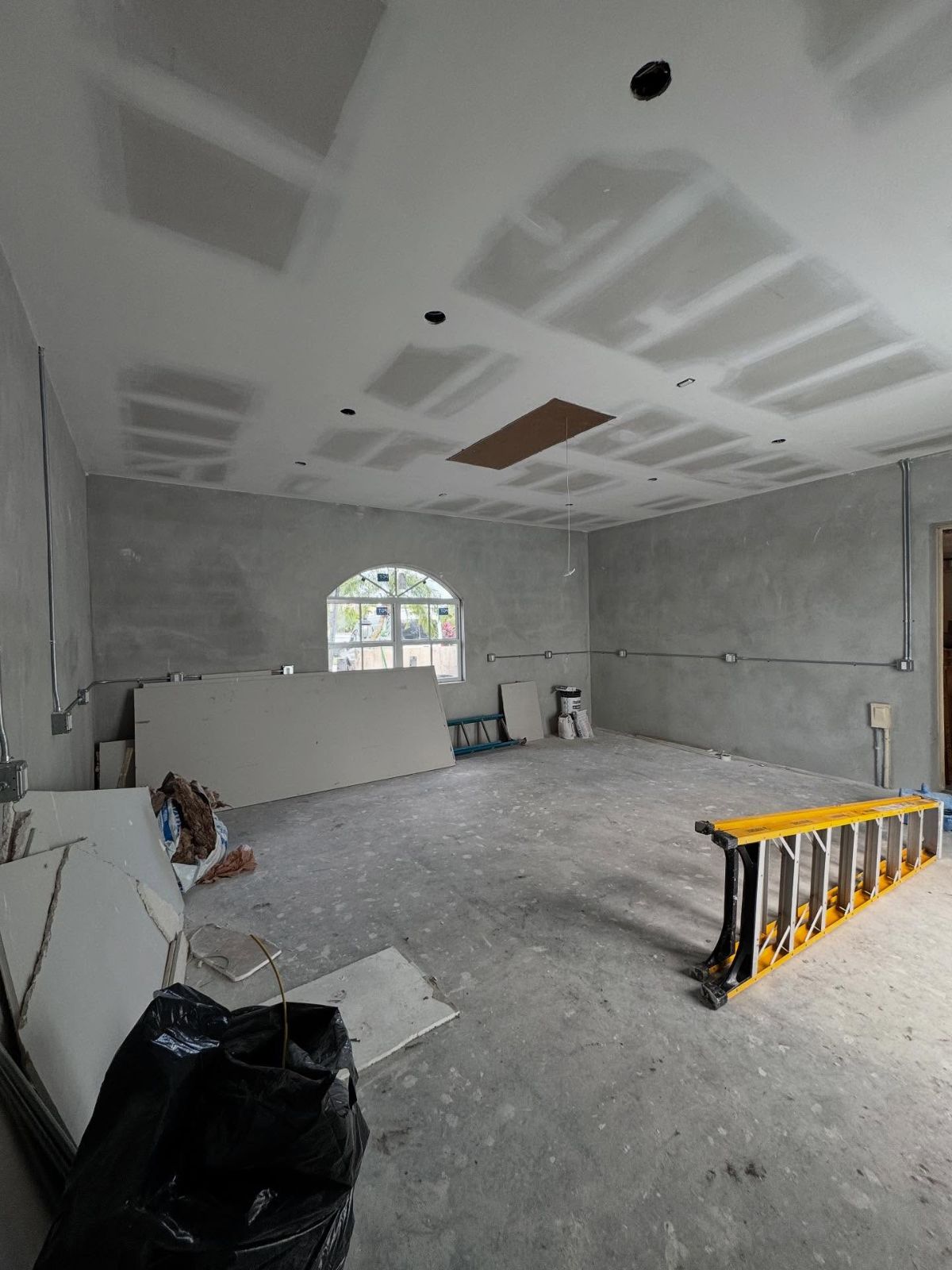
Kitchens and baths
These two rooms carry more code requirements than the rest of the house combined, and they're where the old wiring is least likely to keep up. A kitchen needs its own small-appliance circuits, GFCI protection on the counter receptacles, and a real plan for the dishwasher, disposal, microwave and range that doesn't run three of them off one tired 15-amp circuit. Baths need a dedicated circuit and GFCI. If you're moving the island, the floor boxes and the feeds under it move too.
What's already in the walls
Two things turn up constantly in homes of this age around here: two-wire circuits with no equipment ground, and — in houses built roughly 1965 to 1973 — aluminum branch-circuit wiring. Neither means the house is unsafe to live in, but both change what can legally and safely be connected to them. Aluminum branch circuits need properly rated devices and connections, not a wire nut and hope. Ken tells you which one you have, what it means, and what it costs to correct in the part you're already opening up — which is the cheapest it will ever be.
Additions and the panel
Adding square footage means adding circuits, and the panel is usually already full. Sometimes that's solved with a sub-panel fed from the existing service; sometimes the honest answer is that the service itself is undersized and the addition is the right moment to change it out. Ken will tell you which, and won't sell you the bigger job if the smaller one is correct.
Why a licensed electrical contractor on a remodel
Remodel electrical is permitted work, and it's also the category where unpermitted work causes the most trouble later — at resale, at the 4-point inspection, or with the insurer after a claim.
- Permitted and inspected, so it shows up correctly when the house is sold or re-insured
- Existing conditions get assessed properly instead of buried behind new drywall
- New work is tied into old wiring in a way that's actually rated for it — especially with aluminum branch circuits
- One licensed contractor owns the whole electrical scope, so nothing falls between trades
EC13011489 Licensed & Insured · Commercial & Residential · BBB Accredited Business
Remodels & Additions in your town
Send a photo of the space and your panel — that's usually enough to start.
24/7 Emergency Service — if it's urgent, don't fill in a form. Call (772) 678-9583.
Got it — Ken will get back to you.
Emergency? Call now: (772) 678-9583